Making a difference to prison healthcare
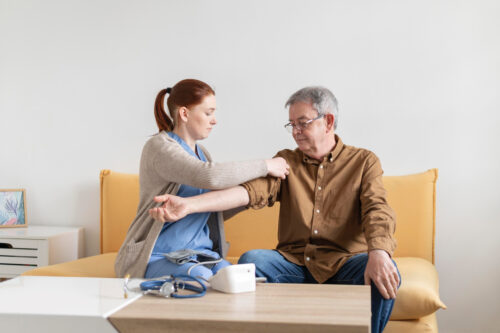
We launched a diabetic education course at HMP Norwich as part of our commitment to making healthcare inclusive and accessible for all.

Diabetic education in a prison setting
The National Institute of Health and Care excellence (NICE) guidelines provide evidence-based recommendations on how healthcare professionals can use activities, strategies and policies to prevent disease and improve health. One of their recommendations is that patients living with diabetes should be offered a structured diabetic education course.
Research showed that a very small percentage of patients within prison had attended a diabetic education course in the past. When patients were spoken to about a diabetic course referral once they have been released, most admitted that they would not attend in the community. This created a unique opportunity to make a positive difference to the health of patients whilst they were in prison.
HCRG Care Group started the diabetic education course at HMP Norwich in September 2022. Before the course it was found that there was an overall low awareness of patients’ own conditions and an inability for service users to self-manage their own health. The course provided structed education in small amounts, which was able to be tailored to the specific needs of the patient.
There were many barriers to overcome to deliver an effective care package, this mainly stemmed from patients not feeling listened to or being involved in their own care. The course provided a great opportunity to improve therapeutic relationships with healthcare professionals and staff, along with promoting trust and dignity within a prison setting.
Together with the diabetic course, a weight management course was also offered. It is a known fact that a high body mass index (BMI) is linked to poor diabetic control in type 2 diabetes and higher insulin resistance. The course started as a weekly face-to-face appointment and once the patient felt more confident, they had the choice to decrease how often they were seen.
The diabetic course started within a group setting, although a group setting was not always possible due to security risk or patient locations within the prison. To counteract this, 1-1 courses were offered for those that were unable to take part within the group environment.

Empowering patients using education and self-management
The overall goals of the course were to increase patient awareness of their own condition, along with promoting independence and the ability to self-manage their own health. By improving the patient’s health there is a proven positive effect of reducing the burden on the NHS and lowering costs.
Firstly, colleagues researched the previous type 1 and 2 diabetic courses offered within the NHS. These courses provided the framework, when structuring the course, to ensure that it included appropriate and relevant material. Engagement with local healthcare professionals running a similar course in a GP surgery was carried out to gain further advice and guidance.
Progress would be measured by patient feedback forms to assess satisfaction, along with regular blood tests to assess a patient’s diabetic control. The blood test enabled us to obtain an overall picture of what an average blood sugar level had been over a period eight-12 weeks.
There were several factors that required consideration during the implementation of the course, for instance some patients started the course but would decline after a few sessions. When spoken to, to find a reason, it was usually due to timing – they did not want to come to the course during their association time. This was overcome by discussing when they would like to attend the course. Another consideration was patients moving to other wings. To overcome this, patients were either moved to another group on their new wing location or offered 1-1 sessions.
Diabetes has both short- and long-term health risks. The better the diabetic control and ability to self-manage diabetes, the lower the risk to long term health implications, such as stroke and heart attack. Both diabetes and high BMI have an adverse effect on the cardiovascular system. By encouraging good diabetic control and a healthy weight, this risk can be reduced.
The diabetic range for diabetes is anything over 48mmol/mol. The higher the HBA1C the poorer the control and higher the risk on the cardiovascular system.
The project has led the way towards better health outcomes for those managing diabetes in a prison setting. It has empowered individuals to take control of their wellbeing like never before, whilst encouraging service users to take ownership of their self-care and self-worth. Collaboration between healthcare staff and patients has been valuable, turning obstacles into stepping stones and most importantly it has promoted independence.
Transformative impact of the project
The following feedback was received from a patient after the course;
“The course has really helped me, not just with knowledge but to want to do better for myself, I exercise much more and I enjoy it.”
Since the implementation of the course, the following results have been achieved:
Structured diabetic course
- Overall average reduction in HBA1C is 17.1mmol/mol. Only one patient had an increase in HBA1C.
- The largest loss was 54mmol/mol.
- Currently 7 patients on the course and 22 patients completed the course.
- 100 per cent positive feedback received from the patient survey
Weight management programme
- Overall average weight reduction of 9.6kg of those trying to lose weight.
- The largest loss was 12kg for a patient that is on the weight loss programme to try and achieve remission for type 2 diabetes.
- Overall average weight increase of 3.2kg of those trying to gain weight. This has reduced the number of food supplement prescriptions.
- Currently 10 patients on the weight loss clinic and 3 patients on the weight gain clinic – but these numbers fluctuate week by week.
- 90 per cent positive feedback from the patient survey.
Note: Some patients who leave/get immediate release from prison are unable to fully complete the course. A shortened version of the course is available if a release date is known, but that information is sometimes not always known.
Building on the course’s success, we are currently exploring future projects, with a particular emphasis on initiating preventative measures for type 2 diabetes. We will continue to promote a supportive environment to encourage patients to not only support themselves but support each other.
In addition, the structured diabetic course is going to be shortened from 12 weeks to six weeks due to patient preference from feedback. We will also be offering a weight monitoring drop-in clinic on one of the wings, for patients who initially do not want to complete the full programme.

Transforming lives through health and care
As one of the UK’s largest community services providers, since 2006 we’ve dedicated ourselves to nurturing impactful and long-lasting relationships with our communities. We’re proud to have made a positive impact up and down the country by designing and delivering services that address the wider economic, social, and environmental challenges faced by the communities we serve.
Health and care commissioners across the country trust us to work with them and their communities to transform services with a focus on experience, efficiency and improved outcomes. We deliver and transform adult and children community health services, primary care services including urgent care and sexual health as well as child and adult social care and wellbeing services.
Across England, we support communities of many millions and directly help more than half a million people each year.
Read more about how we transform