




A blueprint for meeting the UK’s increasing need for insulin injections at home

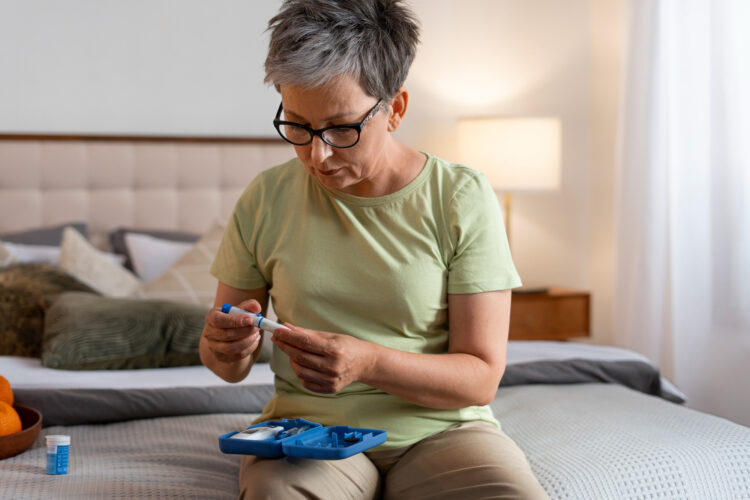
Part of our mission to change lives by transforming community health is about responding to the changing needs of the UK’s ageing population. One of those needs is the growing number of people who need insulin injection therapy in their own homes. Traditionally this would be carried out by community nurses, including District Nurses, but there are national shortages of qualified staff and increased demand on them more generally. So, we have created a blueprint for training Health Care Assistants (HCAs) to administer insulin injections in the community.

6% of the UK population live with diabetes

That’s 1 in every 16 people – a number that’s consistently rising year-on-year

Safely expanding capacity to help patients who require insulin treatment at home

10% of people who live with diabetes have Type 1 diabetes and require insulin. 1 in 4 people with Type 2 diabetes now require insulin as well (Diabetes UK, 2022).

But as services shift into the community with the NHS 10-year plan, the numbers who can’t self-administer insulin have escalated quickly and will continue to grow. So we want to safely expand capacity while helping housebound people with Type 2 diabetes to live more independently.

A training programme inspired by Diabetes UK

In 2020, Diabetes UK launched a campaign seeking to enable non-registered health care workers, like HCAs, to administer insulin to patients in their own homes. Taking inspiration from the Diabetes UK template, we wanted to go a step further and include other injectable diabetes medications as well – developing a process that works across different community nursing services:

HCRG's Delegation of Insulin Working Group

Collaborating across a variety of community nursing services with different processes and needs – all already under increasing pressure – we began training HCAs to administer insulin in the community.

Increasing retention through skills development

As well as easing pressures on community nursing while offering excellent patient care, the training HCAs receive brings new engagement and skills to improve retention within services.

685 hours of nursing time saved per month

After the first 3 months of delegating insulin treatment to HCAs across just two services, redeploying nursing time for other activities

Identifying who HCAs can administer insulin to

The needs of patients living at home have become more complex during the shift of care into community – they may be frail or have poor cognitive function, dexterity or sight, preventing them from managing their own insulin safely. These are the people community nurses have been treating at home in greater numbers, but need more support to keep up with demand.

To do this safely, HCAs can now administer insulin treatment when these six requirements are met:

1. Patients must have Type 2 diabetes

And both their diabetes and prescription must be stable

2. Patients must give consent

Delegating their treatment from community nurses to HCAs

3. Patients must have an initial assessment

This is a risk assessment that makes sure delegation is suitable

4. HCAs must have the right competencies

With mandatory training, insulin e-learning and observed practice

5. Employers must accept responsibility

For the HCA who's providing the delegated insulin treatment

6. A review date must be set

This is to make sure delegated treatment remains suitable

Up to 55% of insulin administrations delegated

Out of all insulin administrations given in Kent each day.

Our roadmap to delegating more treatments

Since the initial training programme, demand for insulin and other injectable diabetes medication administration in the community has risen further, and more visits are being delegated to our HCAs. When patients become part of the new way of working, we share information with them that explains the process of delegating treatment to HCAs, as well as that patients and their carers can be taught to self-administer.

The next steps include partnering with care home providers to train carers in homes and agencies to carry out administration of injectable diabetes medication – with our guidance and an extra step in the process to ensure providers have vicarious liability in place. Part of our dedication to supporting patients is to partner with services to create real change, making the whole community health system better.

Partner with HCRG to transform your services

If your community nurses are struggling with capacity, contact us to discuss our blueprint for delegating administration of injectable diabetes medications to community professionals like HCAs and carers. Our entire process is flexible – we know every service works differently, which is why we’re excited to be offering an adaptable solution that’s transformational for community health care service providers. We’re also training HCAs to administer other medicines – not just limited to insulin and other anti-diabetic medications, but other injectable medications, catheters, enemas and more.

Find out more about our adult community health services

Other case studies