









Shifting care from hospital to home saves £830k a year in North Kent

HRCG Care Group partnered with Dartford and Gravesham NHS Trust and Kent & Medway ICB to deliver an ambitious integrated community model. With a £4.2m shift of acute funding into community-based care across Dartford, Gravesham and Swanley (DGS), we aimed to support patients to either get home faster or avoid readmission – ultimately reducing the overall need for hospital-based escalation beds.

An ambitious collaboration that:

Solving the North Kent challenge

Pressures were rising across Dartford, Gravesham and Swanley’s health and care system – from rising hospital admissions and constrained community capacity to a growing number of ‘no longer fit to reside’ patients (NLFTR). To solve this, our partnership delivered a unified community model that supports the national ambition for a ‘left shift’ of care.

The model combines three interlinked programmes

It’s designed to deliver seamless coordination between acute, primary, community and social care – providing
more care closer to home, preventing unnecessary admissions and accelerating safe discharge.

1. Virtual ward expansion

Doubling capacity from 20 to 40 ‘beds’ helps to provide safe, multidisciplinary care at home for people who may otherwise require hospital admission. Established virtual ward pathways include heart failure, COPD, frailty and IV antibiotics, where patients are safely managed at home on virtual wards with daily multidisciplinary input, advanced monitoring and rapid access to escalation support.

Patients are also able to avoid hospital-acquired infections, prevent deconditioning and loss of independence – maintaining their quality of life while reducing demand for ongoing, high-cost care.

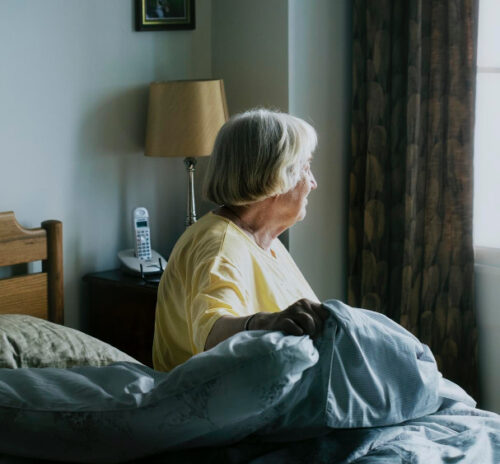
Patients like Mr K are reporting higher satisfaction, reduced anxiety and better recovery:

7,300 extra community bed days per year

By doubling virtual ward capacity from 20 to 40 places, we expect to save £830k compared to inpatient bed days.

2. A Community Transfer of Care Hub

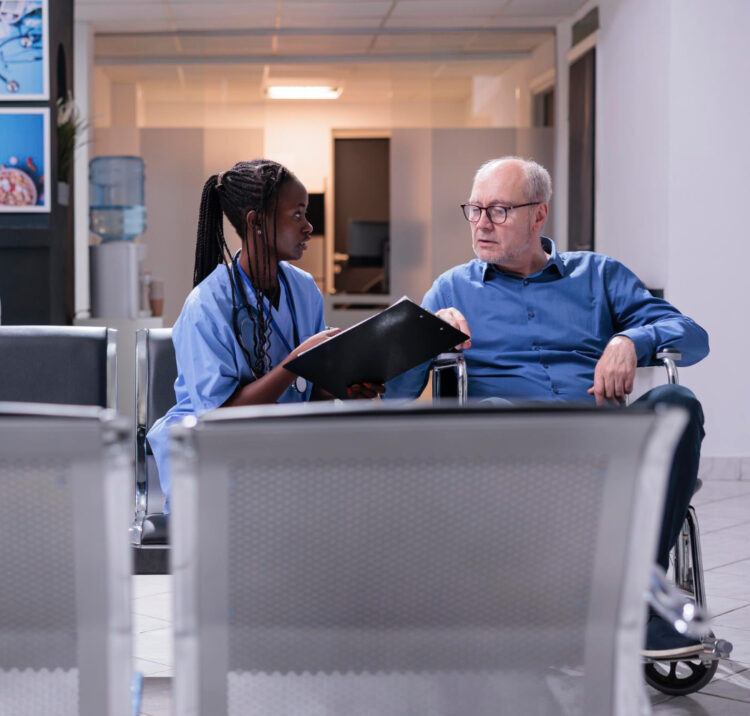
We expanded and enhanced the existing discharge model to deliver a seven-day-a-week service – a single point of discharge led by a community-based team that triages patients, sources community or social care packages, and ensures safe discharge. Uniting acute, community, social care and voluntary sectors into one team swaps traditional barriers and handoffs for proactive, multidisciplinary and person-centred discharge – a ‘left shift’ of care that allows people to recover in the right environment, leading to improved long-term outcomes.

Through the hub we’ve delivered measurable, system-wide improvements in discharge performance, which have directly contributed to enhanced hospital flow, reduced bed-occupancy pressures, and better resource utilisation across DGS.

Enhanced visibility and collaboration

In-reach nurses form a vital part of daily ward rounds, MDTs and frailty meetings. This ensures the discharge process begins at admission and that patients are referred promptly to the correct pathway.

Improved system flow and capacity

We’ve reduced ‘no longer fit to reside’ numbers, with daily calls providing live oversight of patient flow and immediate resolution of discharge barriers – often within 24-48 hours of being medically fit. This improves system resilience, especially during peak periods.

Optimised community bed usage

Early identification of patients who are suitable for rehabilitation or assessment beds increases occupancy efficiency while reducing unnecessary hospital stays.

High quality assessment and placement

Comprehensive clinical assessments ensure each patient’s needs are fully understood, improving the appropriateness of placements and reducing readmissions.

95% of care assessments now take place outside acute settings

This is in line with best practice and national policy.

3. MDT Coordinators

To support development and roll out of Complex and Frail Integrated Neighbourhood Teams, MDT Coordinators are now in post, enriching the offer across all PCNs. Using data from the acute trust, coordinators identify patients who’ll benefit most from the INT model, offering support to avoid deterioration and better manage long-term conditions.

A model that balances prevention and flow

Together our three interlinked programmes form a reproducible framework for system-wide left-shift, which now informs integrated neighbourhood and virtual care planning across Kent & Medway:

Recommendations for system-wide transformation

Kent & Medway commissioners are already looking at how the DGS approach could be implemented by other Health and Care Partnerships in the area. NHS England, Medway Council and other regional systems have commended the clarity of our virtual ward and care hub roles, as well as their shared governance and measurable results.

1. Joint investment and leadership

Shared job roles between HCRG, the acute trust and Kent County Council have broken organisational barriers.

2. Standardised operating procedures

Referral process, patient information and escalation protocols are available for replication.

3. Transparent data sharing

Real-time dashboards ensure collective accountability for community capacity and patient flow.

4. A culture of collaboration

Regular multidisciplinary huddles replace siloed communication, which accelerates decision-making.

5. Cross-system learning

Presentations at the Kent Integrated Care Partnership and Integrated Neighbourhood Team Early Implementer events have shared outcomes and best practice.

6. Workforce enablement

Introducing MDT Coordinators across seven PCNs has created a replicable structure for community coordination, linking voluntary, primary and mental health sectors.

7,300 acute bed days saved in 2024-25

With another 4,000 acute bed days so far in 2025-26.

Recognised at the HSJ partnership awards

Access our community-based care model

Contact HCRG to see how the North Kent blueprint can be adapted for your health and social care system.

Start your left-shift from hospital to home care

Other case studies