Supporting people to swallow tablets or capsules instead of liquid medicines

As the UK’s largest specialist community services provider, HCRG Care Group finds new ways to make positive changes to community health. One of our recent projects encourages people to take tablets and capsules rather than liquid medicines. Here we’ll explore the reasons why and the support we offer.

Prioritising safer medication

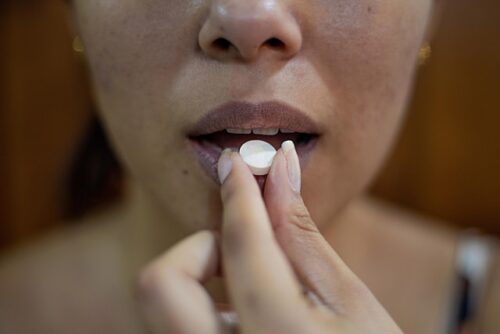
We know many people have difficulties swallowing tablets and capsules, perhaps because of size, texture, gag reflex, dry mouth – even a fear of choking. But we also know the many advantages tablets and capsules have over liquid medicines.

13% of child prescriptions involve under/overdosing

Due to inadvertent errors in administering liquid medicines, according to a report by the General Pharmaceutical Council in 2021.

Nine disadvantages of liquid medicines

  1. Higher risk of underdose and overdose
  2. Higher risk of mistakes in prescribing and dispensing
  3. Bulky storage and transport requirements
  4. High sugar content
  5. High alcohol content
  6. Artificial colours and flavours
  7. Often more expensive
  8. Short shelf life
  9. Poor taste

Teaching safe tablet-swallowing skills

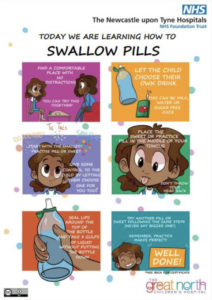
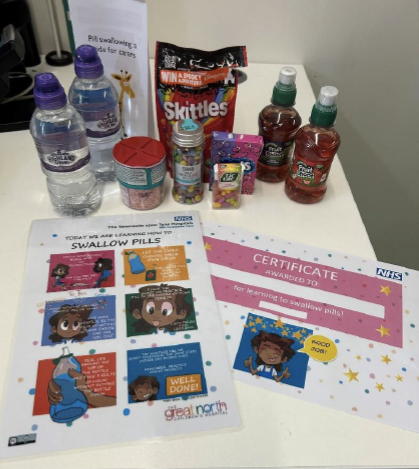
To help children, young people, families and adults to access the benefits of tablet and capsule medications, we help them learn to swallow medication more confidently, using the evidence-based KidzMed method from the Newcastle Upon Tyne Hospitals Trust.

An evidence-based training method

The KidzMed swallowing technique supports patients and their families to teach children as young as four to swallow tablets and capsules. They practise with sweets as tablet substitutes while learning a simple swallowing technique using a sports‑top water bottle.

Tailored to each child

We’re able to teach safe swallowing skills in supportive ways. The training helps many children to swallow tablet-sized objects successfully – including neurodivergent children with sensory differences – preparing them for better treatment outcomes in the future.

Adapted for different patient populations

We have adapted our support and training for adults too – in all sorts of settings – demonstrating the broad potential to improve lives.

1. Children and young people

Using the KidzMed technique with children referred by health professionals and paediatricians, our specialist nurse is helping them to start solid medication or move from liquids to tablets.

2. Adults taking medicines

All of our team have been trained to provide adhoc advice and support to patients. Teams involved include intermediate care, day assessment and frailty services and our special care dental teams.

3. Patients in rehabilitation

We’ve embedded the training into education resources for Falls and Parkinson’s patient rehabilitation groups, with very positive results:

80% found the technique helpful and intended to continue using it at home

Positive results from rehabilitation groups for falls and Parkinson’s.

Teaching a genuine life skill…

As well as the added confidence patients can develop in swallowing tablets and capsules, they experience a huge range of benefits compared to taking medicines in liquid form:

Improved satisfaction

Less disruptive to daily routines

Greater independence

Reduced anxiety around medication quantities

Improved engagement with treatment

Consistent, standardised dosing

Lower risk of dosing errors

Less sugar and alcohol exposure

Simpler to organise multiple medicines

… while reducing medication costs

As well as supporting patients to choose safer, more effective medications, many tablets and capsules are cheaper than their liquid medicine alternatives – including antibiotics like amoxicillin, penicillin and flucloxacillin, and ADHD medication like methylphenidate and clonidine. They’re also easier to transport and store, and reduce the burden of responsibility on carers.

Liquid medicines can be 100s of times more expensive

They may be significantly more expensive than tablets and capsules, particularly when liquids have to be specially prepared.

The clinic has shown very positive outcomes, with many children learning to swallow tablet-sized medication after just one session. Developing this skill supports greater independence with medication, improves long-term adherence and treatment outcomes, and can also reduce prescribing costs by enabling a switch from liquid to tablet formulations. The project also supports some neurodivergent children through the KidzMed approach, creating a safe space with a fun, informal and child-centred style that helps build confidence and reduce anxiety around taking medication.

Becky Picton, Neurodevelopmental Nurse Specialist, HCRG

£2,000 saved per year

For swapping a child’s ADHD medication from liquid methylphenidate to tablets.

£6,700 saved per year

For swapping the medication for a child’s ADHD that’s unresponsive to standard therapy from liquid clonidine to tablets.

A threefold summary of the benefits:

  1. More suitable medications
  2. Better community health
  3. Cheaper medications

But it’s much more transformational than that

We supported a 14‑year‑old boy who was unable to swallow tablets, who had been crushing immediate‑release medication and mixing it with yoghurt. This couldn’t be administered at school, resulting in missed lunchtime doses and significant behavioural challenges. But after we supported him, he was able to swallow a long‑acting, once‑daily tablet each morning. The school then reported big improvements in behaviour – demonstrating the far-reaching ways this sort of intervention can have, from educational to psychosocial.

Would you like to work with us?

This project is one of the many ways we support patients in life-changing, cost-effective ways. If you’d like to work with us, we’d love to support your patients too.

HCRG’s child and family health services

Other case studies